Rafi Industrial Group | Manufacturer and supplier of power cable support equipment


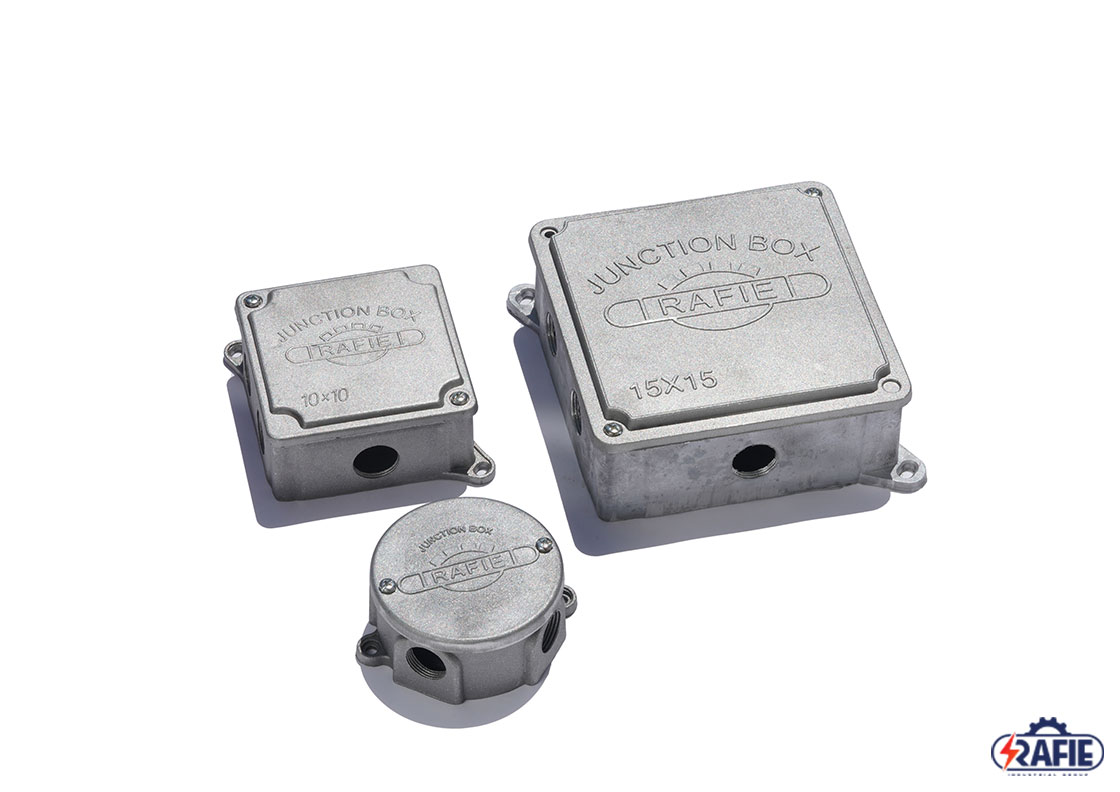
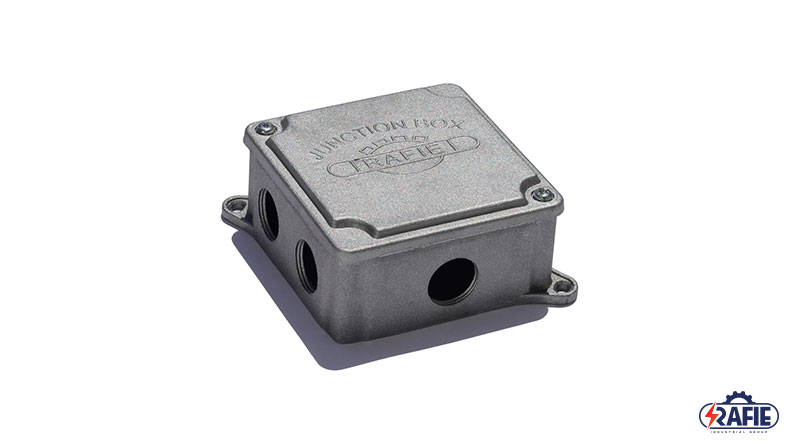
The aluminum junction box is a very resistant enclosure for protecting electrical cable connections in order to create various branches. Generally, receiving input current via cable from a power source exists in many residential, industrial, and commercial structures. Specifically, a main cable enters the structure and is distributed to various points through junction boxes.
The functional mechanism of these boxes is such that inside them, there is a set of various terminals, each used for creating branches of the electrical current. Providing physical protection for these terminals is extremely important, meaning they must definitely be completely separated from damaging environmental factors. The aluminum junction box can not only provide physical protection for its internal connections but also, due to having a metal cover, the most minor factors such as dust as well as moisture and fluids are unable to penetrate the terminal area. In the continuation of the article, we intend to discuss in detail the electrical junction box, their features, size, and all the information that can guide you towards their successful purchase.
The aluminum junction box is a safe and suitable choice for branching from electrical wires, used in various industrial projects. Due to the high diversity of needs for purchasing these boxes, they are usually manufactured with a wide variety, the most important of which are:
The surface-mounted aluminum junction box is installed on the surface of the wall, column, or any other surface. For industrial environments where it is not possible to excavate the wall, this type of junction box can be used.
The flush-mounted aluminum junction box is manufactured in such a way that it is placed inside the block, wall, or column. This type of box has a longer lifespan compared to surface-mounted boxes and can be the best option for luxury commercial and residential buildings.
The explosion-proof aluminum junction box has a thicker body and greater resistance to explosion. In fact, in the event of an internal explosion in the junction box, the possibility of the flame exiting to the outside is minimized. These junction boxes are usually used in combination with explosion-proof cable glands.
If there is a need to install a junction box in environments where the possibility of water entry and penetration is high, the waterproof type must be used. This type of junction box has a silicone gasket to form a good barrier against water entry.
To manufacture the aluminum junction box, two technical paths are feasible. The first method is forming aluminum sheets, and the second method is high-pressure die casting. For producing parts with complex geometry and thin internal walls, the die-casting or casting method is the priority of manufacturers.
Mold design and construction: Initially, design is carried out with dedicated CAD software. Based on the obtained data, molds made of hot-work steel are machined, which include two fixed and moving halves.
Alloy preparation: Alloy ingots are melted in induction furnaces with a flame up to a temperature of 660 degrees Celsius. Then the molten ingots are injected into the mold cavity by a die-casting machine with a pressure equivalent to 100 to 150 bar.
Controlled cooling and part separation: After injection, cooling systems reduce the temperature inside the mold. This causes uniform solidification and eliminates thermal stresses.
Initial cleaning: At the interface of the two mold halves, excess metal edges form, which must be removed with a sanding machine.
Precision machining: If the casting precision is insufficient for some surfaces, the part is placed on CNC milling machines. Operations such as precise drilling of gland locations, internal threading for cover screws, and creating sealing grooves are carried out at this stage.
Final finishing and surface coating: The raw aluminum surface, to increase corrosion resistance and improve aesthetics, undergoes an anodizing process or electrostatic powder coating. Anodizing, by creating a hard oxide layer with a thickness of 10 to 25 microns, electrically insulates the surface and makes it resistant to abrasion.
This type of electrical junction box, in terms of structural material, is completely manufactured from die-cast aluminum. This very important question may arise in the minds of many buyers: what exactly is die casting, what features does it have, and why is this method used for manufacturing aluminum junction boxes?
Die casting is a production process in which, through the casting method, molten aluminum metals at extremely high temperatures are brought to the final shape by applying pressure inside a mold.
The additional pressure applied during the injection of molten metals into the mold can result in special advantages in the design and manufacture of the final product. Among these advantages are very low weight as well as high resistance and strength. The low weight of the aluminum junction box is very valuable, because you can easily install them with high safety at the heights of a structure, whereas the heaviness of these boxes would certainly also affect their safety.
In addition to being lightweight and having high body strength, they also have good resistance to impact. Most importantly, you can place them in direct contact with environmental factors such as sunlight, moisture, temperature fluctuations, and also rainfall. Some of the mentioned features also apply to galvanized junction boxes.

To protect the aluminum junction box against chemical processes such as corrosion and rust, a series of secondary coatings are usually applied to it. This type of coating is known as powder paints or electrostatic coating. There are several methods for applying powder paint to junction boxes, including pre-heating, post-heating, flame spraying, or infrared techniques.
Each of these has its own specific process and can, in turn, increase the hardness intensity of the powder paint film on the boxes. In the pre-heating and post-heating method, as the name suggests, a specific heat is applied before carrying out the painting process and after applying the paint to the intended part. In the flame spraying method, as soon as the powder paint settles on the part, a volume of high-temperature flame is immediately applied to it so that the paint layer is completely cured. In the infrared method, after the junction boxes are coated with a specific thickness of the powder paint layer, they are placed under infrared light, which ultimately causes the paint layer to harden. As you can see, there are various techniques for coating the aluminum junction box. In fact, this matter shows how important the protection of these junction boxes is and can add to the safety of their internal connections.
Aluminum junction boxes have numerous sizings based on the scope of your cabling project. As the number of branches in the output path of the electrical junction box increases, it is proportionally necessary to use a greater number of terminals inside the aluminum junction box. An increase in the number of terminals must definitely be accompanied by an increase in the size of the electrical junction box. In other words, incompatibility between these two variables will certainly reduce the safety of the connections inside the box. For this reason, at the time of purchasing junction boxes, be sure to pay special attention to the matter of size. The sizings available for this valuable part are as follows:
8×8
10×10
10×15
13×13
15×15
16×16
17×19
19×25
20×20
All the mentioned dimensions are in centimeters. However, another variable that can be added to this set of sizes is the depth and height of the aluminum junction box. Although the depth of these boxes does not significantly affect the volume of the terminals inside them, it can play an important role in managing the connections as well as protecting them. The height of these boxes varies based on their size. For example, the 8×8 type of these boxes has depths of 6 and 7 centimeters; the 10×10 and 10×15 aluminum junction box types have a depth of 7.5 centimeters; the 15×15 aluminum junction box and 20×20 aluminum junction box have a depth of 12 centimeters; and the other mentioned sizes have a depth of 9 millimeters. As you can see, as the size increases, the height also increases.

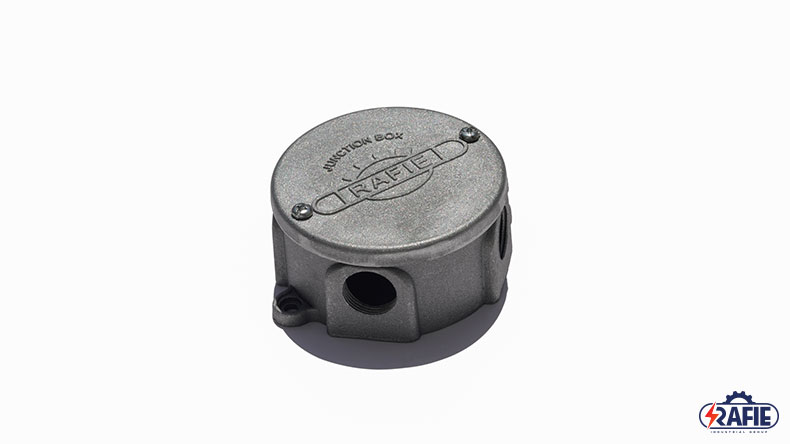
Aluminum junction boxes are among the very high-quality products of Rafi Industrial Group. In addition to square and rectangular geometric shapes, round aluminum junction boxes are also offered to customers. Therefore, you can purchase these cable connection support equipment items with confidence in their standardization. The experts and specialists of Rafi Industrial Group, by providing comprehensive and principled consultation, will guide you in selecting the appropriate size of junction box. Obviously, receiving this specialized consultation can help you have a successful purchase.
To receive free consultation, please fill out the form below. Rafi Industrial Group consultants will contact you as soon as possible.
To receive free consultation, please fill out the form below. Rafi Industrial Group consultants will contact you as soon as possible.