Rafi Industrial Group | Manufacturer and supplier of power cable support equipment


![Purchase of coated flexible conduit [Standard dimensions + High technical resistance]](https://rafiepipe.com/wp-content/uploads/2023/08/لوله-فلکسیبل-روکش-دار00.jpg "Purchase of coated flexible conduit [Standard dimensions + High technical resistance]")
If you are looking for complete protection and high flexibility for power and data cables, coated flexible conduit with a corrugated appearance is your best choice. This metal flexible conduit, with its flexible design, allows cables to pass through complex paths and inaccessible angles without damaging the wires. The protective coating of these conduits provides greater resistance to moisture, dust, impact, and harsh environmental conditions, significantly increasing the durability of the cabling system. For this reason, flexible conduit has widespread application in industrial projects, construction, electrical panels, and sheds, providing both safety and efficiency.
Coated flexible electrical conduit (Flexible Conduit with Coating) is a type of flexible and bendable electrical conduit whose inner part is made of steel and whose outer part is covered with a layer of PVC coating. Due to having an insulating layer, these conduits have high resistance to moisture, heat, and electrical current transmission, and like a conductive product, they prevent the risks of electric shock. These conduits are used for transmitting electrical cables, especially in CCTV installation systems and transmission in underground spaces.
Using coated flexible conduit has many more advantages compared to ordinary flexible conduits or electrical steel conduits. This very issue has caused these conduits to replace traditional conduits in many projects. Among the most important advantages of this conduit are:
High flexibility: The most important feature of coated flexible conduit is its ability to bend at complex angles and paths. This advantage reduces installation time and makes cabling easier to implement.
Resistance to moisture: The PVC coating prevents water and moisture from penetrating into the conduit and protects the wires from damage. For this reason, it is an ideal option for humid environments.
Protection of cables: Coated flexible conduits protect electrical cables and wires against impact, abrasion, pressure, and dust.
Fire-resistant property: Most coated flexible conduits are manufactured in such a way as to show high resistance to fire. Therefore, these conduits will demonstrate the best performance when exposed to high heat.
Easy and quick installation: Due to high flexibility and suitable weight, the installation of this conduit is much easier than rigid steel or PVC conduits.
Corrosion resistance: The internal galvanized layer and external coating increase resistance to rust and corrosion. This very issue improves the resistance of these conduits in any weather conditions.
Increased electrical system safety: Using coated flexible conduit reduces the possibility of cable damage and short circuit occurrence, increasing the system’s safety.
Flexible electrical conduits are mostly used in industries where the use of steel conduit is not possible and, at the same time, the conduits must be bent. In this case, there is less need to use equipment and fittings that create curves and angles. Among the most important applications of industrial flexible conduit, the following can be mentioned:
Use in building electrical systems: In residential, commercial, and office buildings, flexible conduit is used for routing wires and cables.
Oil, gas, and petrochemical industries: Due to its suitable resistance to environmental conditions, this conduit is widely used in industrial and refinery projects.
Air conditioning systems: In some HVAC systems, it is used to protect control and power cables of equipment.
Electrical panels and industrial equipment: Coated flexible conduit is very practical for connecting electrical panels to industrial devices and machinery.
Humid and outdoor environments: In parking lots, sheds, factories, and outdoor environments where there is a possibility of water ingress, the use of this conduit is recommended.
Telecommunications and network systems: This conduit is also used to protect network cables, fiber optics, and telecommunications equipment.
Protection of electrical cables and wires in embedded and exposed building systems
Use in false ceilings, hollow walls, and limited, inaccessible spaces
Routing cables through paths with sharp bends and angles without damaging the wires
Protection against dust, moisture, and impact, which increases electrical wiring safety
Application in industrial electrical panels for holding and protecting control and command cables
Use in ventilation, lighting, and other electrical installations that require high flexibility and durability.
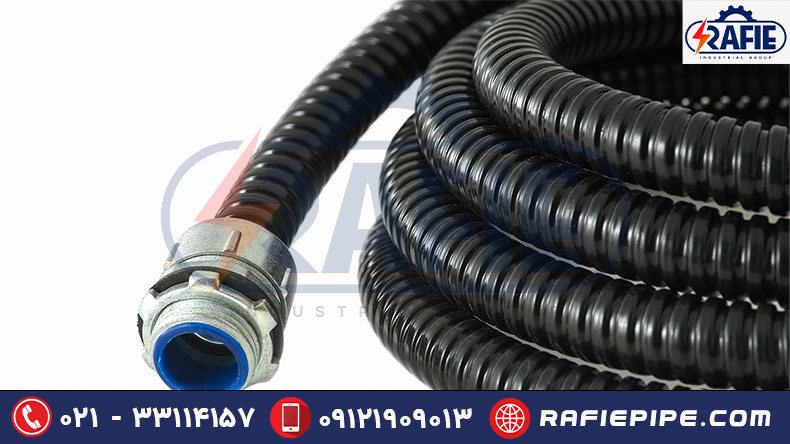
High flexibility: These conduits have the ability to bend at various angles and can easily be installed in winding paths without damaging the cables.
Mechanical protection: Suitable resistance to impact and pressure prevents possible damage to the wires.
Resistance to moisture and dust: Resistant coatings increase the service life of the conduit and better protect cables in humid and industrial environments.
Easy installation: Light weight and high flexibility increase the speed and ease of installation.
Increased safety: With better protection of cables, the possibility of short circuits and problems arising from cable damage is reduced.
High durability: High-quality material and protective coating provide resistance to various environmental conditions and increase the useful life of the electrical wiring system.
One of the very widely used models of flexible conduits are those that are completely designed from alloy, but have a polymer layer on them. Many users want to know exactly why these layers are used on coated flexible conduit and for what purpose this has been done. Most manufacturing companies take all environmental stresses into consideration and try to prevent long-term damage to the conduits by strengthening them.
In many industrial environments, numerous stresses threaten the conduits. Oily substances, simple dust, ambient atmosphere, and water fluids can all cause damage to the conduits upon contact with the metal part of the conduit. So it is logical to prevent this from happening by applying a soft plastic coating. This valuable feature can even reduce or completely eliminate conduit repair and maintenance costs.
In most cases, coated flexible conduit is referred to as being able to be used to support cables and wires. However, we need to look at this matter more precisely. What type of cables and what kind of wires can be placed inside metal flexible conduit? Given the structure of the conduits and that they are completely flexible, very thick cables cannot be placed inside these conduits, because these cables are very heavy, and flexible conduits will not be able to bear their weight and keep the cables stable at the heights of the structure.
On the other hand, we must have the correct judgment for selecting conduits, because this type of cable, due to its dimensions and structure, can guide us in choosing conduits. Steel conduits, cable ladders, and cable trays are equipment used for routing cables.
However, wire strands are usually the ideal option for being placed inside coated flexible conduit. We should also note that some cables have a small diameter and do not have a high weight. This type of cable can also be routed inside flexible conduit.
Therefore, wire strands and small-diameter cables are the best electrical conductors that have full compatibility and conformity with these conduits. Wires are single, whereas cables have several wires within a polymer sheath. This is the difference between a wire and a cable.
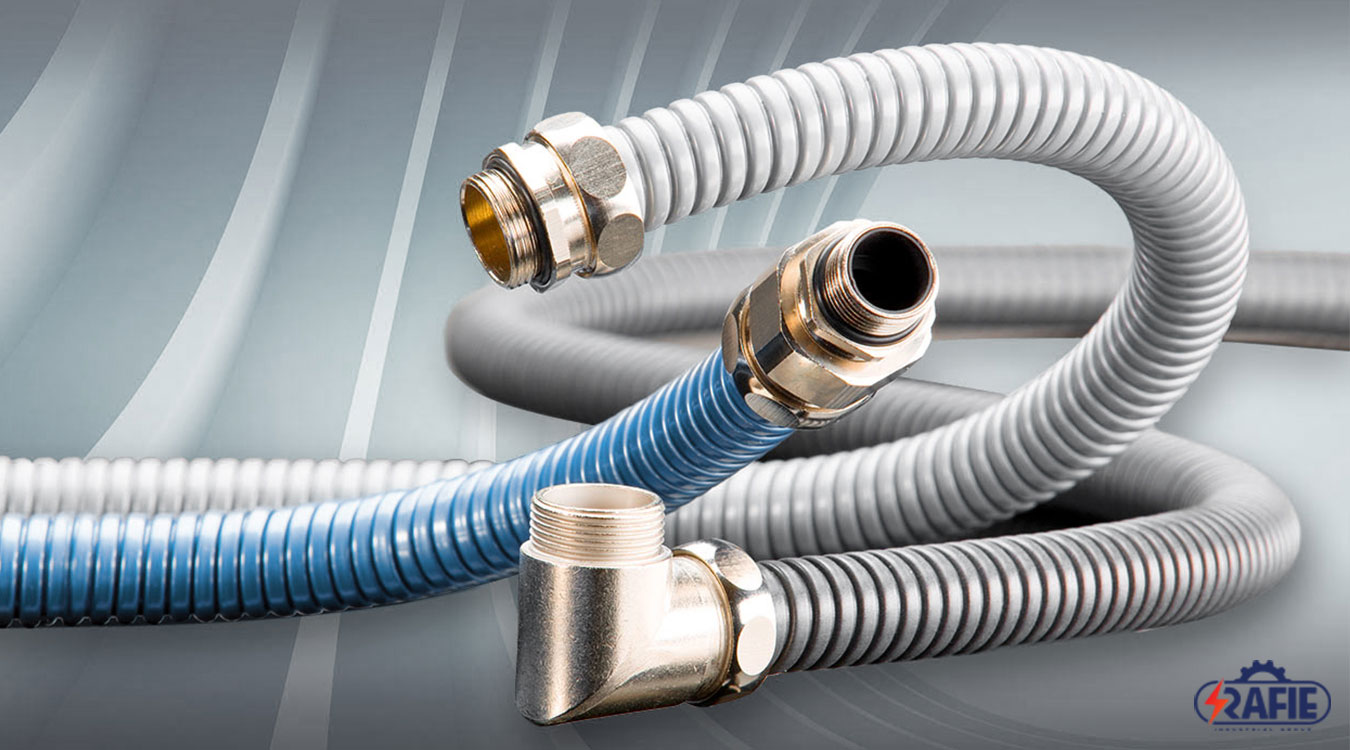
Flexible electrical conduit and ordinary flexible conduit are both used to protect cables and wiring, but there are important differences in their structure, application, and features:
Flexibility and structure: Flexible electrical conduit is made of softer and more flexible materials such as PVC or polyethylene, which bends easily and allows for easy installation in complex and angled paths. In contrast, ordinary flexible conduit is usually harder and thicker and has less flexibility.
Type of use: Flexible conduit is mostly used in environments where there is a need for bending and routing cables through winding paths, such as inside false ceilings or hollow walls. Ordinary flexible conduit is more suitable for straight or less winding paths and as cable protection under less pressure conditions.
Resistance and durability: Flexible conduit usually has greater resistance to impact, pressure, and moisture and is more suitable for industrial environments or outdoor spaces with harsher conditions. Ordinary flexible conduit may be more sensitive to some environmental conditions.
Weight and installation: Due to its flexibility and lighter weight, flexible conduit allows for faster and easier installation, while ordinary flexible conduit is heavier and its installation may require more precision.
Specialized applications: Some flexible conduits have fire-resistant or UV-resistant coatings required in specific projects, while ordinary flexible conduit does not have such features.
When we look at a coated metal flexible conduit or polymer models, its outer part has a wavy shape. There are many reasons for this type of design. In fact, flexible conduits must be able to move freely in different directions. If this spring-like or corrugated structure did not exist, they would not have the ideal freedom of movement and directional orientation. In fact, this is an engineering reason adopted for the design of flexible conduits.
Now, if you want to turn a metal with a small thickness into a pipe shape and its outer part does not have a spring-like form, then they cannot easily change direction in various paths. This feature makes the usability of flexible conduits easy and simple and also increases the installation speed. Flexible conduits are not only for supporting cables and wires; rather, they are usable in industry for a wide range of applications. The simplest of these is their use in designing and manufacturing faucets.
The first important point to consider when using flexible conduit and, in general, any type of electrical conduit is the required length. If these conduits are chosen too short, they naturally cannot reach the intended destination. If they are longer than their standard length, you will again have to spend a lot of time managing these high-length conduits.
For this reason, it is better to determine the length and distance from the very beginning so that you can use the flexible conduit in precise dimensions in the wiring project. After that, you should choose short paths for the wiring. The longer the path, the more complex the management of the wiring network becomes. This matter applies equally to various types of electrical steel conduits. The structural fittings must be completely prepared.
For flexible conduits, flexible conduit clamps are widely used. In addition, glands must also be purchased in the appropriate quantity. If, for any reason, you want to wire over long distances using these conduits, there are also inter-conduit glands that, as a connector, extend the conduit path. Therefore, for execution, fittings play a vital role, and great care must also be taken in selecting the correct size.

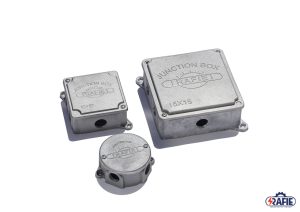
Junction boxes are very widely used parts employed in all cabling networks. In fact, one cannot have a strong and professional power distribution system without using junction boxes in it. So these boxes have a special place in such networks. Fortunately, all models of flexible conduit, whether metal and coated or polymer types, can be connected to these boxes. So it is not only various types of steel conduits that are routed towards distribution boxes with numerous types of single-screw and double-screw glands; rather, alongside that, if you have an exposed or even embedded wiring project, the routing of coated flexible conduit to boxes is also possible.
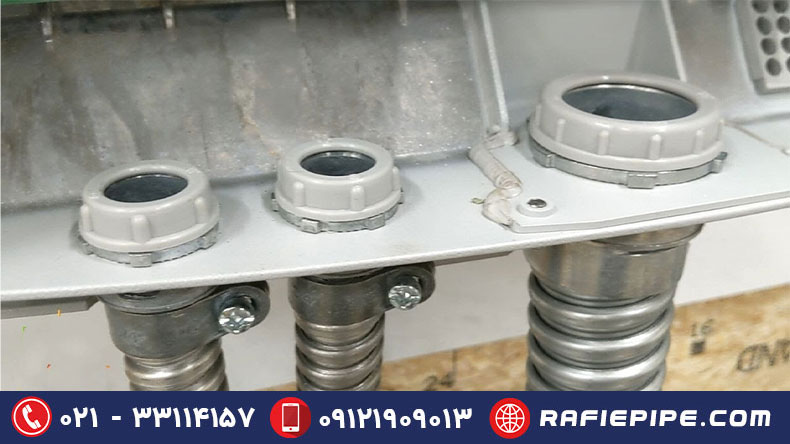
Although among flexible conduits, due to the high length of the conduits, there is no particular need for inter-conduit fittings, when you want to connect these conduits to distribution boxes, we need a secondary connector. As you can see in the image, these flexible conduits are connected to junction boxes using glands and internal screw-like washers. Even if you pull these conduits with high force, no detachment will occur.
Their tensile strength is so high that if the equipment or junction boxes fall from a height, due to the strong connection they have to these conduits through the glands, they can remain in the same suspended state until repair, correction, and reconstruction operations are carried out. Therefore, under various conditions, the safety of your wiring will be at the highest possible level.
Another feature and, in a way, fundamental characteristic of coated flexible conduit is that the wires easily move inside these conduits. In other words, if you have installed these conduits in an embedded manner within the structure, it is enough to use a fish tape used to pull wires into flexible conduits.
The grooved structure that exists inside coated flexible conduit of any type will lead to the wires having a good sliding condition inside the conduit. In many conduits that are not of good quality or have a dry structure, wires may get stuck inside the conduits, and extracting them may be very time-consuming and difficult.
However, in the case of coated metal flexible conduits, these very valuable features will make the wiring operation quick, easy, and simple. The soft and flexible body of these conduits is also one of the reasons for the ideal support of the conduits for electrical wires. Of course, we must be careful in choosing the type of conduits for the wiring project. In most cases, cables must be routed in the project, in which case steel conduits are more practical, and for smaller-diameter wires, flexible conduits are preferred.
Very important questions that always arise when purchasing coated flexible conduit are: what exactly is the size of these conduits, which includes their internal diameter and their length, and what type of size will be suitable for our project? To answer this question, we must say that, given the structural flexibility of these conduits, it is possible to coil them in very long lengths.
Consequently, the most common length considered for coated flexible conduit is 25 meters. However, with an increase in the diameter of these conduits, coiling them may be somewhat difficult. For this reason, at larger diameters, the length of each coil decreases, and in some types, it may reach up to 10 meters.
The diameter of coated flexible conduit has a very wide variety, so you can find these conduits with internal diameters in gauge numbers 9, 11, 13, 16, 21, 25, 29, 36, 42, 48, 52, 63, 75, and 100. Each of these sizes supports specific dimensions of cables. Regarding the second question about what type of size we should choose, the matter is very simple, because we must assess the volume of wiring and its dimensions.
The greater this amount, the larger the diameter of conduit you must use. The issue of selecting the appropriate size of coated flexible conduit is extremely vital and important. Choosing inappropriate sizes can not only waste your purchase cost but also, choosing small-sized conduits for thicker wires and cables will cause damage to the conduits as well as the electrical wires and cables.
One of the important features that can be mentioned for metal flexible conduit is the use of the most resistant alloys for manufacturing the product. Although these conduits have a relatively weaker texture and structure compared to steel conduits, their type of usage is different, and they are used in various projects.
Currently, galvanized stainless steel alloys and, in some cases, aluminum are used to manufacture these conduits. Due to the spring-like structure type that these conduits have, they easily maintain their flexibility. As you know, flexible or corrugated conduits are classified into three groups: completely plastic or polymer, uncoated metal, and coated metal.
Therefore, we must purchase them based on the type of project need. Flexible alloy conduits have a small thickness, but this does not mean that they are easily breakable or degradable. A metal or alloy flexible conduit has various resistances, including compressive resistance, tensile resistance, impact resistance, and so on.
Of course, all these elements are explained separately in this article. Galvanized sheets are used not only in manufacturing flexible conduits but also in other work areas, such as manufacturing various types of cable trays, connecting parts, and other cable support equipment.
You should also pay attention at the time of purchase to whether the conduit alloy type is aluminum or galvanized stainless steel. Usually, these two have a high similarity to each other, but their technical features are not the same. Although these conduits are installed at the heights of structures and less risk threatens them, they must be made of the most resistant material.

If you pay attention to the overall structure of some models of coated flexible electrical conduit, a polymer coating has covered them. Although the metal structure of the conduits has high resistance and strength, they are still prone to damage and corrosion. As mentioned, flexible conduits are made from galvanized alloys.
This does not mean that the metals will never and under no circumstances rust. Rather, their corrosion and oxidation process, as well as the discoloration of the metal, occurs over long periods of time. In fact, the chemical reactions have been delayed.
However, there is another alloy that is much more resistant than galvanized sheets, and that is stainless steel. In some cases, manufacturing companies try to use stainless steel alloy to manufacture conduits as well, which is in specific cases. These alloys do not need any type of galvanized coating and are inherently rustproof.
However, galvanized sheets delay destructive chemical reactions, so using a high-quality polymer coating, especially made of PVC, can multiply this resistance several times and prepare a conduit with a long, standard service life for your projects. Other models include uncoated metal flexible conduit, which also has different uses.
Currently, various sizes of flexible conduit of any type—that is, polymer flexible conduit, metal flexible conduit, as well as coated and uncoated types—cannot be used without connecting parts, namely flexible cable glands. You cannot freely connect these conduits to various electrical equipment such as panels, junction boxes, and other parts. Therefore, a gland is certainly necessary and essential.
These glands, as flexible conduit connectors, are connected only at the end of the conduit. In industries where you want to connect the flexible conduit to a box, there is very high compatibility between the flexible conduits and the glands. The structure type of the glands can be of metal, stainless steel, or plastic and polymer. Which one you use depends on the material of the conduit. Of course, glands are also capable of directly connecting to cables without conduits, which are usually classified into armored and unarmored cable gland categories. However, for conduits, a suitable and fully compatible and coordinated type must definitely be purchased.
For flexible conduits to be routed and guided with high organization within a structure, they must be used together with metal clamps. These clamps are designed in such a way that they can hold the conduits at the highest level of safety within a structure. The main application of these fittings is to prevent the conduit from sagging and scattering.
The structural material of these clamps is galvanized stainless steel sheets, and they have high resistance and strength. They also have various classifications in terms of sizing and can hold various types of flexible conduits of different sizes within a structure. Since the texture of polymer flexible conduits as well as metal ones may change due to the force applied by the connecting part, a polymer layer is placed on these clamps.
They are also known as insulated flexible conduit clamps. When connecting these clamps, the conduits have greater stability and remain in place without slipping. To complete standard conduit installation projects, only the conduits are not enough; rather, you must also have special focus on their fittings. The more correctly the fittings are used in their proper place, the greater the stability of the conduits. In general, conduits are always sold together with fittings, so one cannot be supplied without the need for the other.

The environmental protection rating for various types of coated flexible conduit shows to what extent these conduits are resistant to damaging environmental factors and can provide safe and suitable conditions for electrical wires. These conduits can protect electrical wires and cables against dust ingress.
Furthermore, by using various types of standard glands, they can even completely neutralize the effects of water immersion. Of course, the glands available for installation on coated flexible conduit have different types, each used for a specific situation.
Coated flexible conduit can ideally resist high temperatures. Moreover, sub-zero temperatures also cannot have a destructive effect on coated flexible conduit. All sizes of these conduits have the ability to withstand a minimum temperature of -5 degrees Celsius as well as +90 degrees Celsius. Of course, this depends on the duration of exposure of these conduits to high-temperature environments.
Because, according to tests conducted, these conduits can even tolerate temperatures of up to 110 degrees Celsius over a short period of time. So, if, according to the conditions of your industrial structure, you have such temperature fluctuations, you should not worry, because these conduits will not suffer any damage.

During the design and production process of coated flexible conduits, a series of engineering tests are performed on this type of conduit. The obtained information and data are provided in full detail below.
Given the metal material of these conduits, they practically demonstrate suitable resistance against pressure. The maximum compressive resistance of coated flexible conduit is 1250 Newtons.
In some cases, flexible conduits may be subjected to stretching; therefore, they have the ability to tolerate 100 Newtons of tensile force.
Impact resistance is also one of the valuable advantages these conduits possess. According to recorded reports, if a 2-kilogram weight is dropped from a height of approximately 30 centimeters onto coated flexible conduit, practically no damage will occur to the conduit.
If, for any reason, these conduits become suspended during an incident in the environment, they can withstand a maximum force of 450 Newtons for a period of about 48 hours. Therefore, under such conditions, your electronic equipment will be protected from falling and damage.
Dear customers can purchase various sizes of coated metal flexible conduits along with various types of flexible conduit clamps of the highest quality level from Rafi Industrial Group. Contact our experts to receive information related to product pricing as well as other technical details. The provision of specialized consultation by our experts can help you have a successful and completely satisfactory purchase.
To receive free consultation, please fill out the form below. Rafi Industrial Group consultants will contact you as soon as possible.
To receive free consultation, please fill out the form below. Rafi Industrial Group consultants will contact you as soon as possible.