Rafi Industrial Group | Manufacturer and supplier of power cable support equipment


One of the extremely valuable and practical parts usually used in electrical conduit installation projects is the plastic end cap. Given the specific application that these parts have, this question may always come to your mind: exactly in what cases are they used, and what role do they play in the electrical conduit network? To answer this question, we must say that these end caps, due to their structural material and design type, can increase the safety of cabling along with conduits.
Generally, electrical cables and wires are easily vulnerable due to their soft polymer sheath. Therefore, preventing damage to cables is always among the priorities of any cabling network. In the continuation of the article, we will discuss the functional mechanism of these end caps, manufacturing material, advantages, and their sizing. So, if you intend to purchase these parts, by reading this article, you can gain relatively comprehensive information.
The plastic end cap, as its name suggests, is placed at the end of the electrical conduit. Therefore, due to its design type, it is easily screwed onto the end of the conduit. However, some of its types are unthreaded and are placed inside the conduit. Generally, at the inlet and outlet of conduits, due to the uneven and relatively sharp edge that exists, there is a possibility of damage to the outer sheath of the cables. Any abrasion at the end of the conduit on the cables can cause stripping or contact of the wire strands with the metal body of the conduits.
By intelligently using the plastic end cap, we provide the conditions so that the outer sheath of the electrical cables and wires does not suffer cuts, abrasion, and similar issues. This smart technique can certainly increase the safety of cables in conduit networks. So, if you want to provide a safe and suitable path for electrical cables, be sure to use these end caps at the ends of conduits under the necessary conditions.
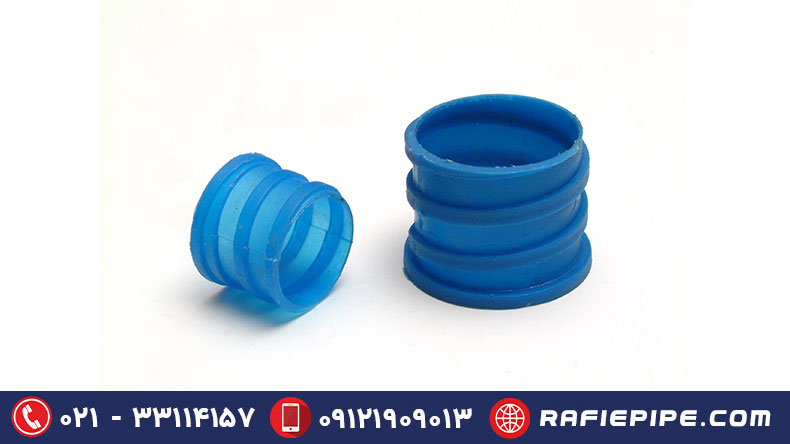
The plastic electrical end cap is a practical part for protecting electrical cables and has excellent thermal resistance. These end caps, with suitable flexibility for installation and covering the sharp edges of flexible conduits, do not allow cable damage.
Protection of electrical cables: The most important advantage of using the plastic electrical end cap is protecting electrical cables against impact and sharpness caused by metal conduits. This will also increase the service life of electrical cables.
Very high durability: Due to being made of high-grade polymer, the resistance of plastic end caps is very high. Also, despite their plastic and polymer material, they do not have a brittle and dry structure and can fit precisely inside the conduits.
High heat resistance: If the metal flexible conduit and its plastic end cap are exposed to heat and high temperatures, they will not deform. Plastic end caps tolerate temperatures from -5 degrees Celsius to 90 degrees Celsius well and do not deform.
Easy compatibility with electrical conduits: These end caps have very regular threads that are completely compatible with the internal diameter of electrical conduits and flexible conduits. This greatly improves the installation of plastic end caps.
Flexibility for installation: The spring-like shape of these end caps improves their flexibility for installation. The end caps can be easily installed in the appropriate place, coordinated with the structural dimensions of flexible conduits, and prevent their deformation.
Covering sharp edges: The sharp edges present in flexible conduits are covered with the help of the plastic end cap to prevent tearing and damage to cables during transmission.
Since the plastic end cap is used for flexible electrical conduits, it must definitely have a grooved structure similar to the flexible conduit. The fine threads placed on the plastic end cap create greater stability for these parts inside the conduits. For a safe connection, it is sufficient for the end cap to be placed on the flexible conduit, and then by twisting it, the plastic end cap easily mounts onto the flexible conduit and creates a secure connection. This design and geometric structure, despite its simple functionality, requires that you order flexible conduits with standard dimensions coordinated with the end caps so that they fit completely inside them.

Since the plastic end cap has the ability to connect to various electrical conduits, it is consequently produced in different designs. As you know, conduits capable of supporting various types of cables come in steel electrical conduit and flexible electrical conduit types. These end caps have full compatibility with both of the mentioned conduits. However, the design type of these two types of plastic end caps differs from each other.
Therefore, if you want to use flexible conduits, you must keep in mind that you should use end caps specifically designed for this conduit. The same applies exactly to steel conduits. By placing these polymer parts, you can create ideal physical protection at the inlet and outlet of the conduits where the cables are routed.
If you have paid attention to various types of flexible electrical conduits, they have uniform pitches on their body. Applying any type of force, such as tensile forces, at the two ends of the flexible conduits can cause an increase in size and a change in these pitches. So, the functional mechanism that the plastic end cap creates when placed at the end of the flexible conduits is that it prevents the stretching or increase and change of the pitch on the surface of the flexible conduit.
This valuable advantage can certainly prevent structural changes in the conduits in the long term. What we need to pay attention to in electrical conduit networks, especially metal flexible conduits, is that in addition to the physical protection of the cable, we must use complementary parts so that the conduits are also not damaged. The plastic end cap is precisely one of those parts that can help maintain the structure of the flexible conduits and cables.
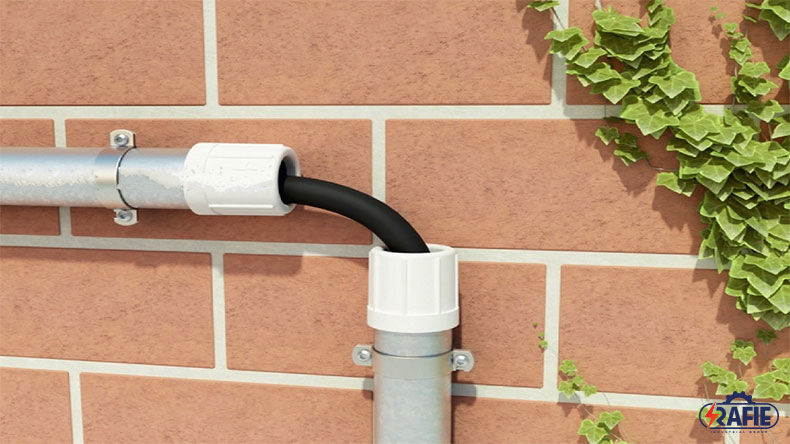
Given that flexible conduits as well as steel electrical conduits are designed and manufactured in various sizings, it is consequently necessary for the plastic end cap to also be designed in accordance with the size of the conduits. Generally, you cannot use end caps in the network that are smaller or larger than the electrical conduits. Therefore, creating size compatibility between the end caps and the conduits is extremely important. There are numerous sizings for electrical conduits, the most common of which ranges from PG13.5 to PG48. Therefore, the plastic end cap also has the capability to support the mentioned sizes.
These parts are made of polymers and plastic compounds. However, due to their very high density, they can practically have good resistance in high-stress environments. The application of limited and controlled forces cannot cause them to break, crack, or shatter, provided, of course, that you have normal and proper use of these parts. The type of polymers used in the manufacture of these parts is usually polypropylene compounds. However, their derivatives may also be used for their manufacture. All of them are among the most durable structured polymers for producing various types of connecting parts.
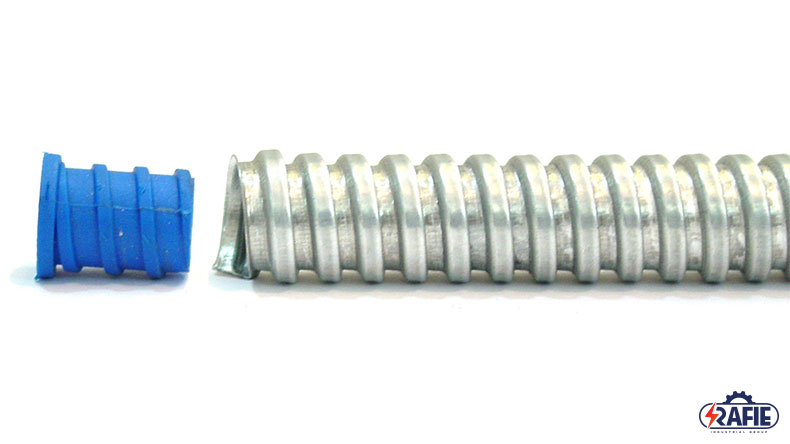
The role of the plastic end cap in electrical conduit installation is as important as other parts such as clevis hangers and Spit clamps. In this regard, plastic end caps are produced with the best quality and high resistance at Rafi Industrial Group and offered to you. You can order this part simultaneously with other electrical conduit installation parts such as couplings, two-way fittings, and pull tees to create a safe connection of the highest quality. Rafi Industrial Group, with its specialized consultants, is ready to provide any kind of expert consultation for purchasing various types of conduit bodies and offering a comprehensive guide for their purchase.
To receive free consultation, please fill out the form below. Rafi Industrial Group consultants will contact you as soon as possible.
To receive free consultation, please fill out the form below. Rafi Industrial Group consultants will contact you as soon as possible.