Price of cable ladder with diverse dimensions 💫 | Purchase from the most reputable manufacturer
Cable ladders play a vital role in the electrical wiring systems of buildings and can maintain their performance for cable transmission even in the harshest conditions, with high resistance to impact and environmental conditions. With over a decade of experience, Rafi Industrial Group is a manufacturer and supplier of cable ladders with the best quality and guaranteed resistance to impact, corrosion, and moisture. With the engineered cable ladders of Rafi Industrial Group, you will no longer have any concerns about the transmission of small and large cables and wires. You can use the cable ladder with proper ventilation and without worrying about excessive heating of the cables, minimizing the need for repairs and re-cabling.
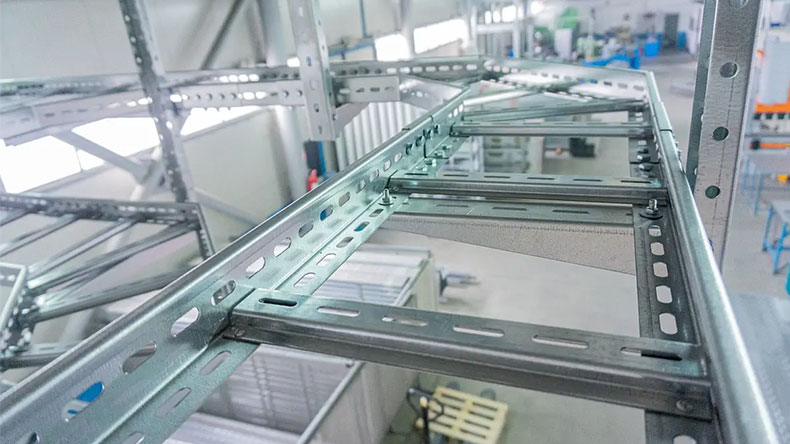
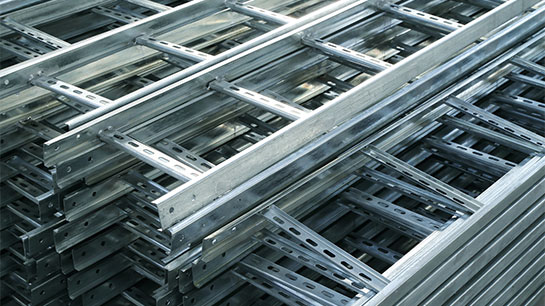
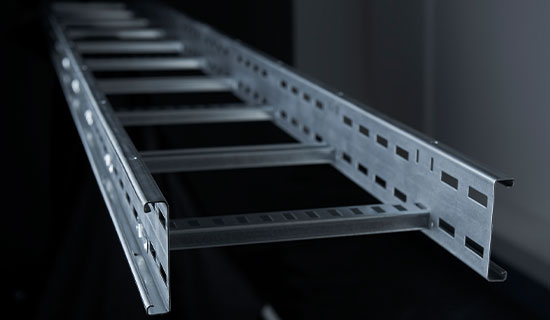
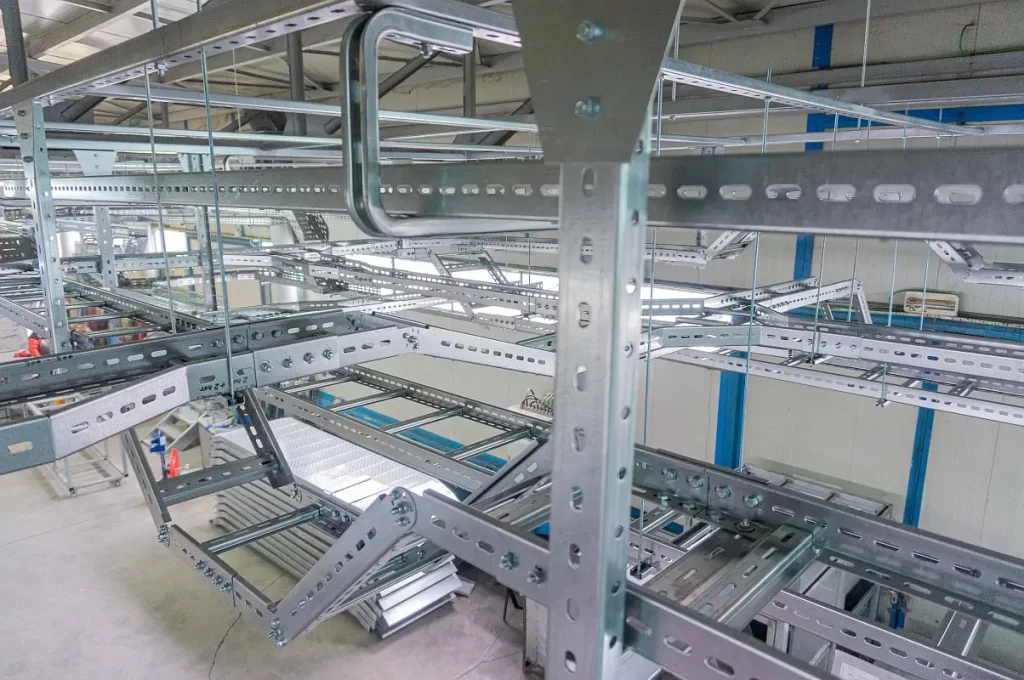
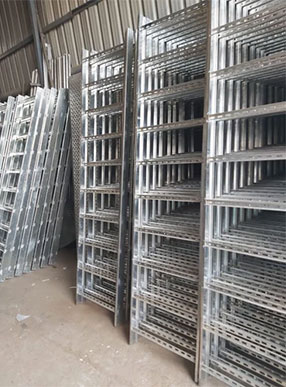
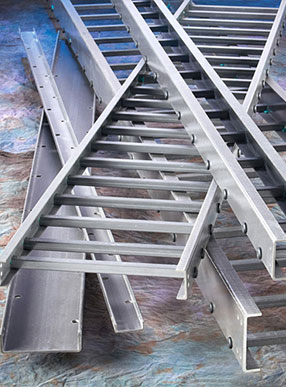
A cable ladder is a metal section in the shape of a ladder, consisting of galvanized steel components joined together, with a simple design including side rails and rungs attached to them. The rungs on the ladder are perforated, making it easier to directly attach cable clamps and ties onto it. Cable ladders are used for the safe transmission of power, instrumentation, and telecommunications cables, and heavy cables, cable bundles, and pipes can be placed on them.
Cables can enter and exit the cable ladder at any point along its length. Ladders provide free airflow, which is essential to prevent cable overheating, and result in minimal accumulation of water, moisture, and dust. The visibility and accessibility of the cables simplify future inspection and modifications, so that when repairs are needed, technicians can easily access the cables on the cable ladder.
What are the applications of electrical cable ladders?
High impact resistance, proper ventilation, and very high safety for the passage of electrical cables are among the most important features of this ladder, which have led to a wide variety of its applications. In any project where you need to safely transmit electrical cables and proper ventilation is your priority, you can benefit from electrical cable ladders.
Industrial environments: Management of power distribution and automation networks in industries, factories, and workshops
Manufacturing plants: Management and control of wiring for various machinery, communication systems, and production automation
Office complexes: Management of lighting, audio, and video equipment wiring and preventing unauthorized access to them
Hospitals and imaging centers: Securing, managing, and organizing hospital and imaging equipment cables
Data centers and information transmission: Cable control with the best ventilation to reduce heat output
Outdoor facilities: Management of lighting, telecommunications, and lighting equipment cables and wiring
Oil and gas industries: Supporting cables in harsh environments and oil platforms
Power plants: Managing extensive power distribution networks and professional control and automation systems
Various factories: Organizing the wiring of machinery, power distribution, telecommunications, etc. in manufacturing and chemical plants
Telecommunications industries: Protecting extensive telecommunications cable networks and preventing disruptions in them
Transportation industries: Managing transportation systems, communications, and power cables in railways and airports
Food and pharmaceutical industries: Maintaining health and safety standards for electrical cables and organizing the environment to reduce contamination
The difference between cable ladder and cable tray
Cable ladders and cable trays are both designed for the management and support of cables, but they have distinct differences in their design and applications. The cable ladder is ladder-shaped, with horizontal rails and vertical rungs, and is suitable for installing heavy and bulky cables in industrial and commercial environments. This design facilitates easy installation and maintenance of cables, and due to its open structure, it also provides good ventilation for the cables. On the other hand, the cable tray is designed as metal or plastic trays on whose surface the cables are placed, and it is suitable for long and straight paths. This design is usually used for lighter cables and in office and commercial environments, and due to its flat or perforated surface, it keeps the cables neatly and in an organized manner. In general, the choice between cable ladder and cable tray depends on the specific needs of the project, the type of cables, and the installation environment.
What are the features of electrical cable ladders?
Strong and durable structure: Cable ladders are made of galvanized steel, stainless steel, or aluminum, which have high resistance to corrosion, moisture, and impact.
Open design suitable for ventilation: Due to the open design of the cable ladder, air flows well around the cables, which helps with better ventilation and reduces the heat generated by the cables.
Ease of installation and repairs: The cable ladder is easily installed, and access to the cables for repairs, replacement, and adding new cables is very simple.
High load-bearing capacity: The cable ladder has the ability to support a large number of heavy-weight cables without bending or becoming damaged.
Variety in sizes and models: Cable ladders are produced in various sizes and models to suit the diverse needs of industrial and construction projects.
Resistance to heat and chemicals: Some cable ladder models are resistant to heat and chemicals, which are very effective in industrial environments with harsh conditions.
High safety: Cable ladders are designed to reduce the risks of cables falling or bending, thus preventing electrical problems and possible accidents.
Types of cable ladder fittings
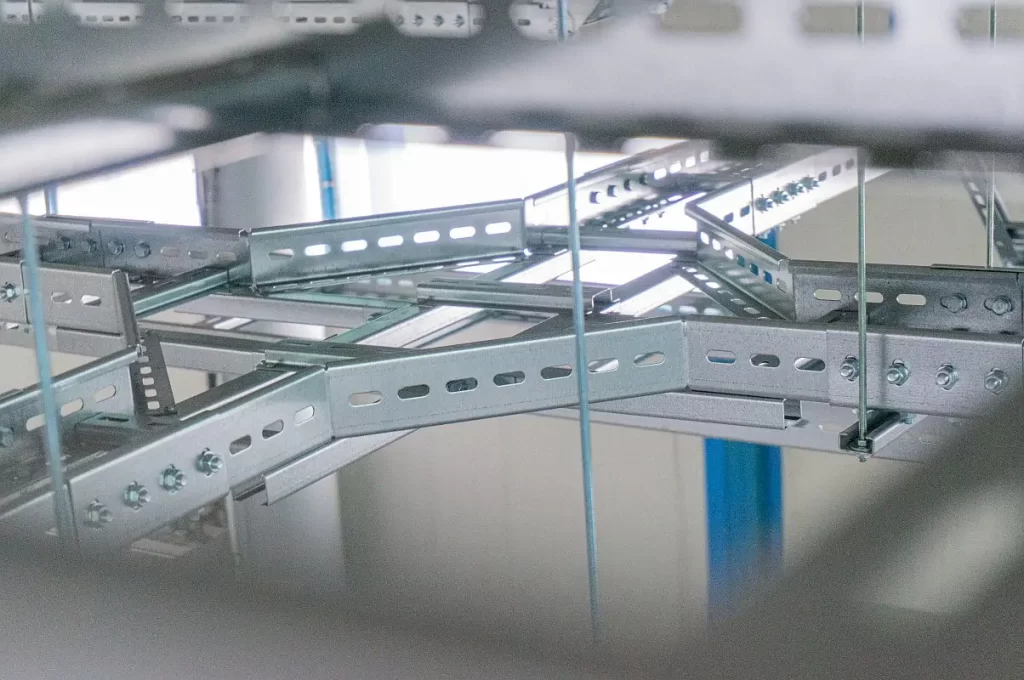
Cable ladder tee: This fitting allows you to connect the cable ladder perpendicularly (in three different directions). The tee is usually used to change the direction of the ladder during installation.
Cable ladder connector: Connectors are used to join two pieces of cable ladder together. These fittings are usually installed by bolts or welding and create a continuous structure.
Cable ladder end cap: End caps are used to cover the ends of cable ladders. This protects the ladders from damage and environmental factors and gives them a better appearance.
Cable ladder cross: This type of fitting allows you to connect the cable ladder in four different directions. It is usually used to create intersections and changes in the ladder path.
Cable ladder reducer: Reducers are used to change the size or type of cable ladder. For example, ladder reducers may be used to change from ladders of different widths or from steel ladders to aluminum.
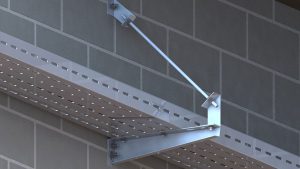
Cable ladder support: Supports are used to hold and brace cable ladders along the installation path. They are usually attached to walls, ceilings, or other structures and help maintain the strength of the ladder.
Cable ladder elbow: Elbows are used to create a change in the angle of the cable ladder. They allow you to bend the ladder at various angles (usually 90 degrees) to adapt to environmental conditions.
Cable ladder riser: Risers are used to create space for cables within cable ladders. They assist in the installation and management of cables inside the ladder and are typically used to guide cables at various heights.
Technical specifications of electrical cable ladders
Material and manufacturing materials: Cold galvanized, hot-dip galvanized, stainless steel, aluminum
Dimensions and sizes: Width 15 to 60 cm, rung height 30 to 50 cm, custom length
Design and structure: Sturdy rungs and side rails, coating and color for aesthetics and identification
Loading and capacity: Weight-bearing capacity from a few kilograms to several tons, resistance to pressure and vibration
Regulations and standards: Compliance with international standards (IEC, ANSI, etc.), guaranteed safety in design
Additional features: Cable duct, mounting supports usable on the wall, ceiling, or floor
Access and installation: Easy installation and maintenance, suitable fittings and equipment
Cable ladder installation steps
Inspecting the installation environment and evaluating support structures
Planning the cable ladder route and determining connection points
Gathering installation tools and equipment
Inspecting the cable ladders and ensuring there are no defects
Installing the supports and securing them to the wall or ceiling
Installing the supports at appropriate intervals
Assembling and connecting the ladder sections using connectors and fittings
Adjusting the height and angle of the ladder according to project requirements
Installing end caps and elbows for changing angles
Installing risers for managing cables at various heights
Final inspection of the installation and checking of connections
Testing the ladder to ensure load-bearing capacity and proper function
What factors does the price of a cable ladder depend on?
Product material: Cable ladders are usually made from various materials such as steel, aluminum, or compressed plastic. Depending on the material of the product, they have diverse prices.
Load-bearing capacity: Cable ladders exist with various load capacities. Ladders that have a very high load-bearing capacity are usually offered at a higher price in the market.
Length and width: The dimensions of the cable ladder affect its price. Ladders with larger dimensions usually have a higher price due to the greater consumption of materials and manufacturing complexity.
Brand and manufacturer: Reputable brands usually have higher prices due to their manufacturing quality and reputation. These brands may offer better warranties and after-sales service.
Technical specifications of the product: Special features such as fire resistance, height adjustability, and other technical specifications can affect the price of the ladder.
Warranty and after-sales service: Ladders that come with a warranty and after-sales service usually have a higher price. These services may include repair and replacement of parts.
Types of electrical cable ladders
Cold galvanized cable ladder: These types of ladders are coated through a cold galvanizing process, which provides good corrosion resistance and is suitable for use in dry and low-risk environments.
Hot-dip galvanized cable ladder: In this type of ladder, the galvanized coating is added to them using a hot-dip galvanizing process. This process increases their resistance to corrosion and harsh weather conditions, which is why this type of ladder is suitable for use in humid or outdoor environments.
Stainless steel cable ladder: These ladders are made of stainless steel, which, due to its high resistance to rust and corrosion, has a longer service life. This type of ladder is particularly used in industrial environments and under harsh conditions.
Aluminum cable ladder: These ladders are made of aluminum, which, due to their light weight and high corrosion resistance, are suitable for installation and use in various environments. Aluminum ladders are especially used in projects that require easy transportation.
What are the advantages of electrical cable ladders?
Protection of cables: The electrical cable ladder helps protect cables against physical and environmental damage. These ladders, by holding the cables in the correct position, prevent collisions and possible damage.
Increasing cable lifespan: By preventing unnecessary pressure and bending, the cable ladder can help increase the useful life of the cables. This reduces the need for repair and replacement of cables.
Order and organization: Electrical cable ladders help organize and manage cables. This facilitates identification, maintenance, and modification of cables and prevents unnecessary complexities.
Easy access: Using an electrical cable ladder makes access to the cables easier when they need repair or inspection. This easy access can help improve efficiency and speed in maintenance operations.
Protection of people: Cable ladders, especially in industrial and commercial environments, can prevent hazards caused by disorganized and tangled cables and provide a safer environment.
Prevention of electromagnetic interference: Some electrical cable ladders are equipped with a special design that can help reduce electromagnetic interference and prevent problems related to electrical signals.
Cable ladder production stages
Cutting: At this stage, metal sheets are cut to the required sizes for manufacturing the cable ladder. This can be done using CNC cutting machines or other metal cutting tools.
Punching: After cutting, the sheets must be processed to create holes and slots that help with the installation of cables and fittings. This stage is usually carried out using punching or press machines.
Bending: At this stage, the cut and punched parts must be shaped into a ladder form. Bending involves deforming the metals to the desired angles so that the parts take the shape of a cable ladder.
Welding the parts: The bent parts are welded together to create a complete and strong cable ladder. This stage can include arc welding (ARC) or MIG/MAG welding.
Inspection: At this stage, the cable ladder is inspected to ensure the quality and accuracy of production. This inspection may include checking the welds, dimensions, and overall conformity of the ladder.
What points should be considered when purchasing a cable ladder?
Technical specifications: Check the technical specifications of the cable ladder, including dimensions, load capacity, and the type of construction materials, to ensure it matches the needs of your project.
Appropriate thickness: Choosing a ladder with appropriate thickness and sufficient strength to support heavy cables and industrial environments is very critical.
Design type : Pay attention to the design and installation possibility of the ladder; the ladder must be capable of being installed in the intended location and be easily adjustable and installable.
Required standards: Inspecting the quality and production standards of the ladder is also of high importance to ensure its durability and safety over time.