Rafi Industrial Group | Manufacturer and supplier of power cable support equipment


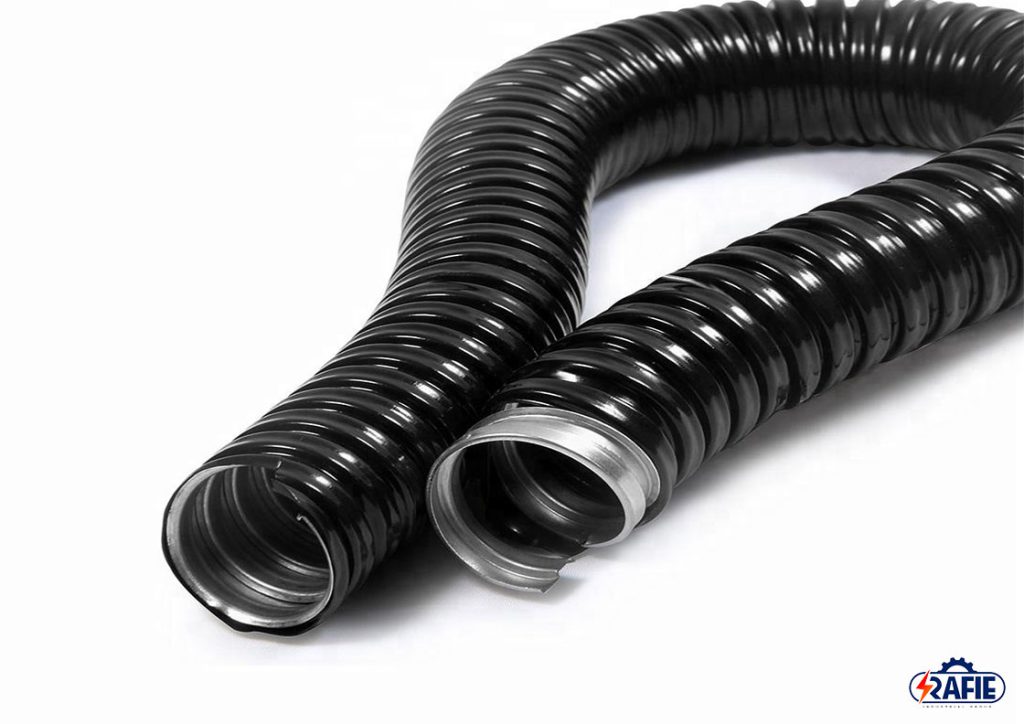
Today, electrical conduits are designed and manufactured in various types, which can be divided into two main categories: rigid and inflexible conduits, and flexible conduits such as flexible electrical conduit. Flexible or corrugated conduits, which are made with a thin membrane, are specifically used for projects requiring high flexibility. These conduits can be easily installed in winding paths and confined spaces.
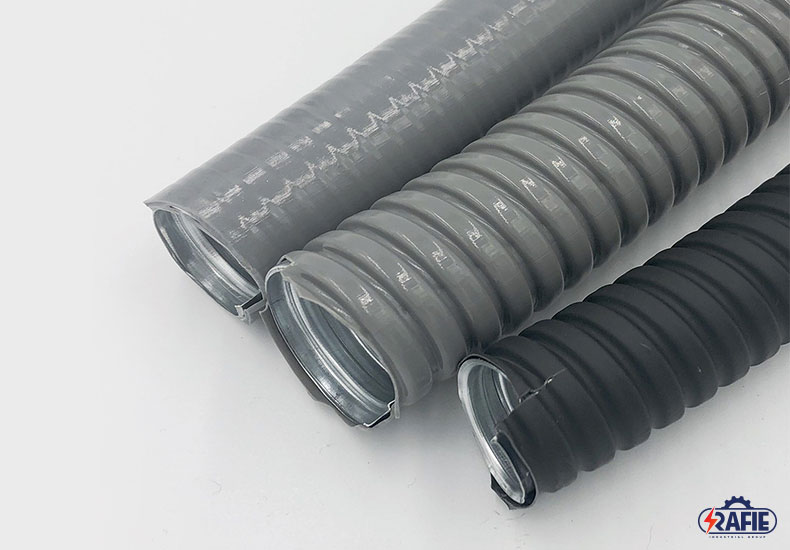
The metal models of these conduits are usually manufactured from galvanized sheets and are offered in two types: coated and uncoated. Due to the thin membrane and light weight, these conduits are easily cut, and their installation is quick and performed without the need for complex fittings. Features such as ease of installation and high flexibility have made these conduits an ideal choice for various projects.
Flexible electrical conduit is one of the types of flexible electrical conduits implementable in various projects, used for the purpose of transmitting electrical wires and cables. The reason for naming this conduit as “flexible conduit” (literally “elephant trunk conduit”) is its external appearance, which is similar to a trunk; however, internally and technically, the durability of this conduit is equal to that of rigid metal conduits, and with its insulating coating and high-quality materials, it can demonstrate very good resistance to impact and the ingress of environmental contaminants.
Flexible electrical conduit is usually made from a combination of resistant plastic materials or metal and, due to its high flexibility, rapid and easy installation in industrial, construction, electrical panel, and lighting system projects, is very popular. Using these conduits, in addition to increasing safety, also ensures the order and aesthetics of the cabling path. In electrical projects, choosing a standard flexible conduit results in longer cable life and simpler maintenance and repair of the electrical system. ⚡
Rafi Industrial Group, as one of the pioneers in the electrical equipment manufacturing industry in Iran, is proud to manufacture and supply a wide range of flexible electrical conduits with superior quality and in accordance with the latest national and international standards. Flexible electrical conduits are one of the products manufactured by this group, which are fully compliant with the latest world standards.
Our wholesale customers can inform us of the quantity and specifications of the flexible electrical conduits and, according to their needs, purchase the best of these products from us at special wholesale prices. Flexible conduits, with a very high bend radius and excellent strength against applied impacts, are not only a resistant cover for your cables in every industrial and residential environment but can also somewhat prevent the risks of electric shock and fire.
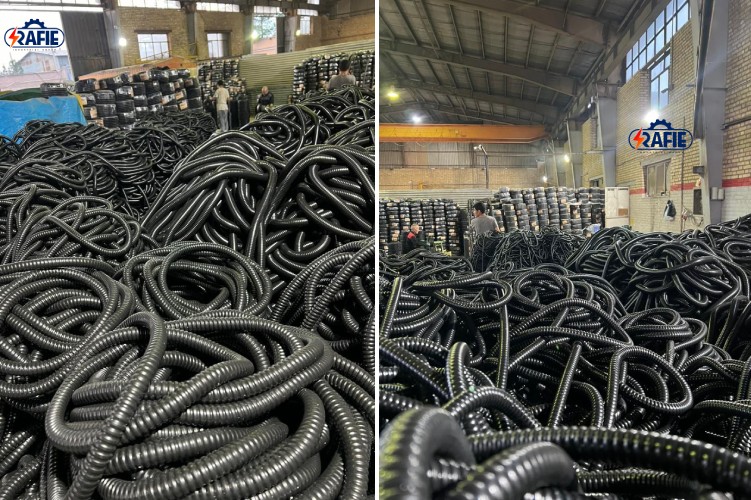
Flexible electrical conduits can be divided into three groups based on material and structure: polymer, metal, and fireproof. Selecting the best conduit for building electrical wiring requires a precise examination of the environmental conditions and the needs of that environment.
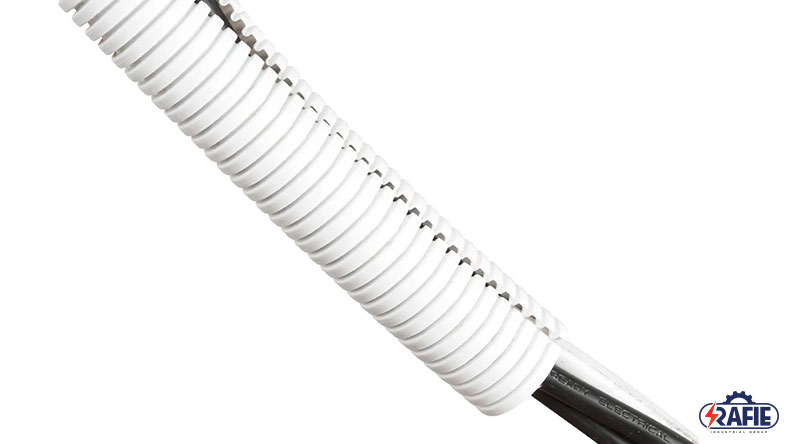
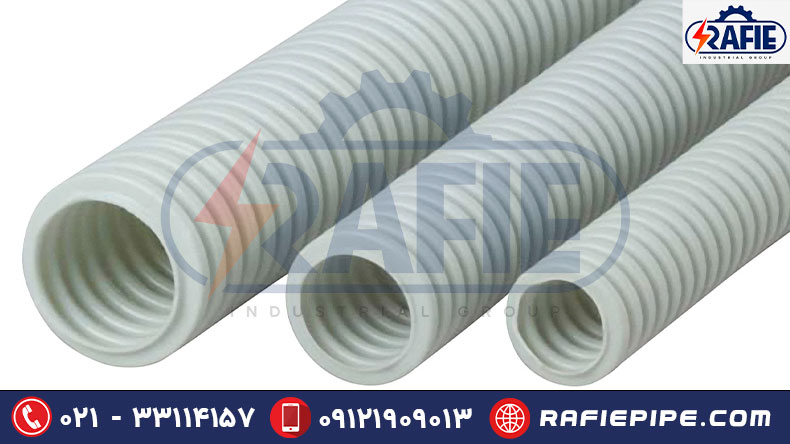
One of the most common types of electrical conduits with high flexibility and reasonable price is the polymer flexible conduit, which is made from PVC or polyamide material. This type of conduit is usually used in indoor wiring projects and some industries and can have excellent performance during building electrical wiring.
Very lightweight
Affordable and high-quality
Excellent resistance to moisture
Acceptable resistance to corrosive chemicals
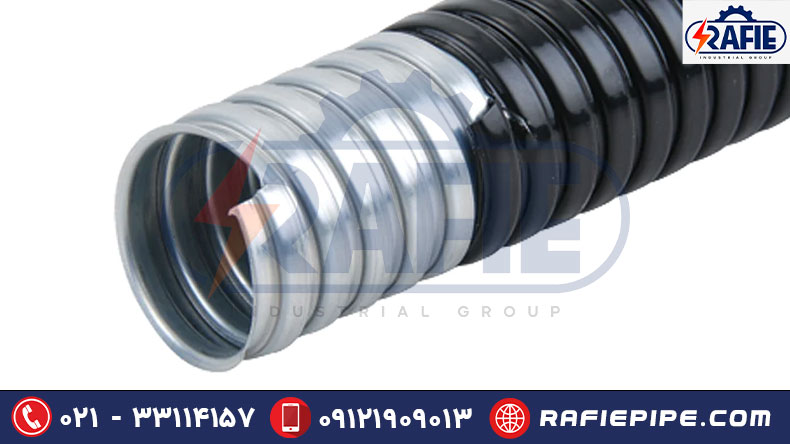
Sometimes, strength and flexibility for building electrical conduit installation must be combined so that the final product has high quality. Coated flexible electrical conduit is manufactured from steel material, and to have good resistance to moisture, a PVC coating is applied to it. This coating is usually black in color and provides excellent protection against moisture and dust. These conduits are usually used in industries and facilities that require ideal physical protection.
High mechanical strength
Excellent protection against impact and pressure
Suitable resistance to heat
Very high flexibility
Excellent resistance to moisture
Fireproof flexible conduit is made from materials that have good resistance to flames and the high heat of fire and also prevent the spread of fire. These conduits are the best choice for public places, commercial centers, and hospitals and can make the intended structure more resistant to fire by creating fire safety standards. Especially for environments with a high probability of fire, these conduits do not allow the destruction of wires and cables and the intensification of fire.
Made from heat-resistant materials
Prevention of fire
Excellent resistance to moisture
Maintains its structure when exposed to high temperatures
| Feature | Specifications |
|---|---|
| Material | Plastic, galvanized, metal |
| Coating type | Polymer coated, uncoated |
| Flexibility | Very flexible and installable in winding spaces |
| Cutting capability | Very easy and quick |
| Resistance | Resistant to corrosion, rust, and mechanical damage |
| Application | Used in building wiring, various industries, and electrical systems |
Flexible electrical conduit is one of the most widely used types of conduit with a completely flexible structure, which is mostly used within the internal or flush-mounted fabric of the structure to support electrical wires. Of course, in some cases, there is no obstacle to using them in a surface-mounted manner. The structural flexibility of these conduits provides conditions for you to create numerous changes of direction in your wiring path without using additional fittings.
Their polymer material is usually made from fireproof PVC, which, in addition to being flexible, also has acceptable resistance. Furthermore, various types of this conduit are made of metal with a polymer coating, about each of which we will provide detailed and useful information.
Their polymer models do not have a dry and brittle structure, and this very factor will ensure that they do not shatter under pressure or minor environmental forces. In the following, while introducing the types of flexible conduits, we will discuss the features and specifications of these conduits.
Several factors influence the price of flexible electrical conduit, and by carefully examining them, you will understand the reason for the price difference. The first influencing factor is the manufacturing brand. Most well-known brands, because they use a set of specific standards to manufacture flexible conduits, offer their products at higher prices. Of course, this higher price is not without benefit and indicates the high quality of these products. Secondly, the material of the flexible electrical conduit and the use of a fireproof or metal layer in it can also determine its price, so that if additional options are added to these conduits, their price will also increase.
The size of flexible conduits is also considered the third influencing factor in their price. The length and diameter of these conduits determine the amount of materials used in them. The larger the overall size of the conduit, the more the customer will naturally have to pay per meter of conduit. Finally, the country’s economic factors and the daily exchange rate and dollar rate can also affect the price of flexible conduit. For this reason, it is better to inquire about the daily price of flexible electrical conduits from reputable sellers such as Rafi and plan your purchase and implementation accordingly.
There is no prohibition in building regulations against using an elbow to connect to electrical conduits. Whenever a conduit needs to be angled, this type of fitting can be used. However, due to the flexibility of flexible conduit, using an elbow is meaningless and merely creates an additional cost. However, elbows can be used for electrical conduits, and the connection point of the elbow and the electrical conduit can also be completely covered with electrical tape.
One of the debatable matters among engineers is the impossibility of using flexible conduits for electrical wiring. In fact, the emphasis of many electrical engineers is to definitely use electrical steel and metal conduits. To refute or confirm this claim, one must definitely refer to Chapter 13 of the National Building Regulations, which specifies the permitted conduits for various types of buildings. In table 13-7-3-2 of Chapter 13 of the National Building Regulations, one can see the list of conduits that can be used in buildings in flush-mounted and surface-mounted forms.
According to this table, flexible plastic conduit, if it is non-self-igniting, can be used for industrial buildings. However, you should note that according to these regulations, flexible conduits are not usable in a surface-mounted manner and must definitely be used in flush-mounted conduit installation. Otherwise, their use is by no means permitted. Flush-mounted conduit installation refers to conduits installed in a buried form in the wall, ceiling, concrete, flooring, etc. Therefore, based on the National Building Regulations, there is no limitation for implementing flexible conduits, but they must only be implemented in a flush-mounted manner (i.e., buried in masonry materials).
Flexible conduit has numerous uses, each of which can be used in a structure based on its structure. One of the important questions raised for internal structure wiring projects is whether flexible conduits can also be used in a buried manner or not. Doing so depends on the conditions of the structure and its overall structure. In general, these conduits possess this valuable capability.
Therefore, the most complex wiring networks can be created with these conduits. Furthermore, the depth at which polymer flexible conduits are placed inside the structure is very important. Usually, according to standards defined for internal structure wiring, these wires cannot be installed inside the structure without considering the depth. According to the defined protocols, flexible conduits must not be more than 10 centimeters from the wall surface, but less than that does not cause any problems.
Structures made of concrete or plaster walls have no limitation for installing flexible conduit inside them. However, their most common application is in commercial buildings, apartment structures, and homes, where the conduits are placed in the plaster fabric.
Since these conduits, compared to steel conduits and rigid polymer conduits that lack body flexibility, you might think they are easily damaged. However, according to the information provided in this article, although these conduits are flexible, some types are made of metal with a galvanized coating.
They also have an additional polymer coating. For this reason, if, due to specific limitations, you are forced to use these conduits outside the structure, there is still no limitation for you, and there will be no threat to the cables. In fact, it is the polymer coatings that prevent dust, fluids, or moisture from penetrating into the conduit.
In roofed structures as well as outdoor environments, it is possible to implement wiring systems to construct various networks and set up different devices and equipment. However, the useful service life for internal conduit installations is much longer than for external structure conduit installations.
This is because environmental elements such as sunlight, dust, and similar factors are influential. In the flexible conduit installation process, a plastic end cap is also used so that the wires are not damaged at the conduit exit point due to the sharpness of the conduit body.
Environmental factors have a gradual destructive effect on equipment and accessories present in the environment, especially cabling networks. We must use flexible conduits that are completely neutral to this environmental effect. Polymer flexible conduits, due to being non-metallic, are not affected by moisture or water fluids at all. Their metal models, given that they are galvanized and also have a coating, also do not suffer structural deterioration. Even models without a polymer coating also have this feature.
This is because galvanized coatings in the industry are used solely for the purpose of waterproofing parts. The important matter is the non-penetration of fluids into the conduit, as its external part has very high resistance and strength.
All the standards that exist for the production of flexible conduit by engineering organizations in the field of internal cabling have all been observed for these conduits. Manufacturing groups produce these widely used parts based on these very standards.
Since the installation and connection stages of flexible conduit in the structure require precision and adherence to a set of standard principles, we must consider a set of important technical matters for implementing these conduits in the structure. As you know, clamps are fundamental to the work of connecting conduits to the structure. In fact, we cannot implement these conduits without connecting clamps. However, the main question is: how are these clamps used? What spacing should be observed for them, and how many clamps do we need?
All of these are important questions in the execution process. As a general rule, various elements are defined for installing standard spacing of flexible conduit clamps, which can depend on the dimensions and size of the conduit, whether it is polymer, metal spring conduit, or coated type, and what weight is created by the conduit and the internal wires. All of these will lead to changes in the clamp installation spacing.
However, according to the standard, when connecting the conduit to a junction box, we must mount the clamp on the conduits approximately 30 centimeters before the junction box and then connect them to the structure. You can also install clamps along the conduit path every 4.5 feet, or about 137 centimeters.
However, if you are using flexible metal conduits and the clamps have a suitable support surface, this installation spacing can increase up to 6 feet, or approximately 182 centimeters. Due to the high flexibility of these conduits, if the clamps are installed at a very large distance from each other and the conduits are in a suspended state, then these flexible conduits may hang from the structure. Therefore, we must utilize an executive expert.
Since various fittings are not used between flexible conduits, many users want to know what the maximum angle change of these conduits is and to what extent their flexibility can create a comfortable and ideal path change. Much explanation was given regarding the flexible structure of flexible conduits. However, answering these detailed questions will lead to users having correct usage of these conduits, free from any type of damage.
Generally, 90-degree direction changes are easily achievable for these conduits. However, if you want to cause excessive bending of the conduits by applying pressure at a single point, then there are some limitations, but in a straight path, the conduits, through creating a gentle arc and having favorable space, can change direction up to 360 degrees. This feature also applies to the various types of these conduits, including polymer, metal, and coated types.
Glands are completely standard and ideal parts used with the aim of connecting conduits to other electrical support equipment. Flexible conduits are no exception to this rule. This type of conduit, which has good flexibility, can be connected using various types of glands, such as double-screw gland types, to equipment containing a high number of connections and terminals. Since there are various sizings for flexible conduits, complete sizings have also been considered for manufacturing glands.
Glands are also applicable for steel and even polymer conduits. The most important advantage of flexible conduit glands is that they prevent these conduits from detaching from other equipment. Applying any kind of tensile force, such that the conduits are connected to other equipment without glands, will cause them to detach and damage the cable. Therefore, we use glands together with flexible conduits to increase the safety of electrical cabling and wiring.
Some gland models are designed for connecting conduits, and others, such as various types of brass glands, as well as armored and steel gland types, can be placed directly onto electrical cables, so cables alone also have the ability to be connected to panels and electrical boxes. Other parts, such as flexible conduit clamps, also exist and are offered for sale together with these conduits.
In fact, these clamps must definitely be obtained, because without them, a strong support network consisting of flexible conduits and cables cannot be created. Fireproof flexible conduit clamps are mostly used along the conduit path. Specifically, they connect the conduit to the structure and prevent them from sagging and scattering.
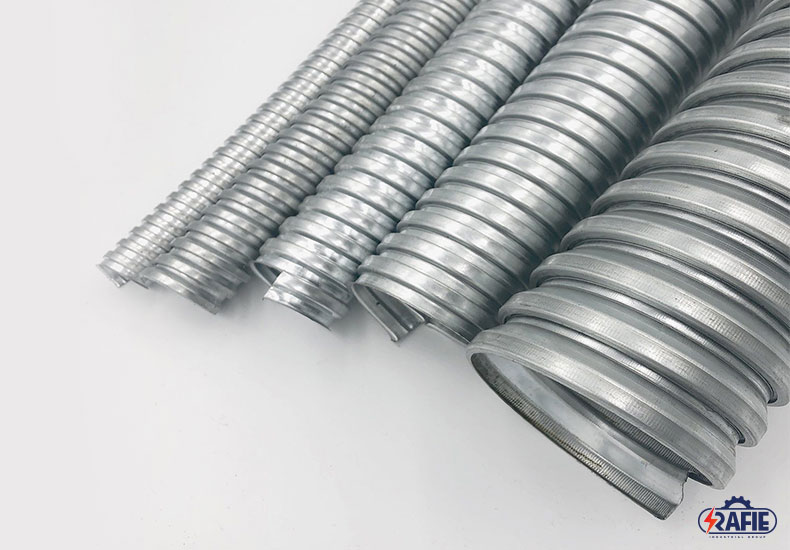
Metal flexible conduits are mostly designed and manufactured from various materials, including steel, aluminum, and stainless steel. These types of alloys, except for the aluminum type, have very high hardness and resistance. Although flexible conduits made of aluminum also have somewhat suitable structural strength, they are at a lower level compared to steel and stainless steel types.
These conduits are designed with a controlled thickness in such a way that they can keep electrical wires away from damaging environmental factors. Steel types of metal flexible conduit also have a galvanized coating. This type of coating practically prevents the occurrence of rust and corrosion on the metal surface. For this reason, if your work environment has humid weather, these conduits will be a good option. On the other hand, stainless steel flexible conduits are inherently rustproof. These alloys have a relatively more complex production process and do not need any other type of galvanized coating.
Today, there is a wide range of conduits for routing and guiding electrical wires. You may need steel conduits and rigid PVC conduits, which are mostly designed to support cables. For smaller wires that have a smaller diameter compared to cables and are used in environments with moderate or low stress intensity, flexible electrical conduit is considered an ideal option. There are numerous reasons why we choose and purchase these conduits, which include the following:
If you take hold of flexible electrical conduits in metal, polymer, and coated metal types and shake them, you will see that they can change direction in any way, unlike rigid, inflexible conduits that do not have this important feature. When you want to carry out wiring in a complex architecture, the flexibility of the conduits comes to your aid, meaning these conduits can effectively find their direction for wiring towards the destination.
Another important feature of flexible electrical conduit is that it is usable in any type of structure. That is, whether your environment is an industrial shed, a store, or even a residential building, we still have a fundamental need for flexible conduits to carry out some wiring projects. Given its various classifications, you can choose the appropriate conduit type based on the environmental conditions. Currently, coated metal flexible conduits are considered the best type.
Despite the mentioned advantages, a flexible electrical conduit is completely lightweight. Since there is no need for inter-conduit fittings, you can carry out the most complex wiring in various directions in a short period of time. There is no type of obstacle or additional element to reduce the wiring speed. When executive technicians want to wire a relatively large area in an enclosed environment, their work efficiency increases due to the mentioned benefits.
A flexible conduit, based on its size and dimensions, is designed and manufactured in lengths of several tens of meters, whereas other conduits with rigid and inflexible structures usually have limited lengths of a maximum of three meters. Of course, the applications of these two conduits are different. However, they can also be compared in this regard. In the production process of flexible conduits, modern machine tools and equipment are used, and this very feature will lead to the high quality of these conduits, allowing you to complete safe and ideal wiring.
One of the very important and vital questions raised at the time of purchase and also during the installation and connection of flexible electrical conduit is how many wires can be placed inside flexible conduit. As you know, usually in internal structure wiring projects, it is possible to use several wire strands inside each flexible conduit. Of course, we should keep in mind that wires are fundamentally different from cables.
Electrical cables usually have larger dimensions and are used for transmitting high-power currents. However, wire strands have a small size and are used for lighter projects. Therefore, it is completely logical to use flexible conduits to support electrical wires. As a general rule, if you want to route and guide a different number of wires inside the flexible conduit, you must pay close attention to the number of cables.
This means that the entire internal space of the flexible conduit cannot be filled with various wire strands. An empty space must be created inside the conduit. Generally, it is preferred that, based on the conduit size, a maximum of 40 to 50 percent of the internal space of the conduit is filled with wire strands. That is, the number of wires must not fill the entire empty space. Rather, half of the internal space of the conduit should be filled with wires, and the remaining space should remain completely free or empty. This type of wiring has numerous advantages for you.
The first is that you can easily pull or move the wires inside the flexible conduit. Furthermore, the electrical wires will not encounter any obstacles and will move completely freely inside the conduit if tensile force is applied. This matter also applies to various types of electrical steel conduits and other electrical piping networks.
Electrical steel conduits have a very hard, rigid, and inflexible structure. These conduits are used in industrial structures, so that they can also be employed in a buried or within-structure manner. They have a heavier weight, and naturally, to install them at the heights of a structure, we need stronger structural fittings.
Various elements can also be mentioned not only for steel conduit but also regarding rigid PVC conduit. Generally, steel conduits and PVC models can provide good physical protection for electrical cables in high-stress spaces. Regarding flexible conduits, the method of use is somewhat different. These conduits are designed and manufactured to support a specific number of wires. For this reason, if you want to route and guide numerous wire strands along a specific path, flexible conduit will be the best option for you.
In terms of technical and structural specifications, steel conduit pipes have fundamental differences from flexible conduits. Their materials also differ, and although both are manufactured to support electrical equipment, each is for a specific application. The method of connecting flexible electrical conduit differs from electrical steel conduits. Specifically, to keep them stable, a flexible conduit clamp is used, whereas for steel conduits, a clevis hanger, Spit clamp, and other structural fittings are needed.
Another type of connecting part that fixes various types of small-sized flexible conduit is the insulated flexible conduit clamp. The question may arise for you as to why galvanized sheet is used to manufacture the clamp, and what the reason is for placing a polymer insulator on it.
As you know, flexible conduits have a relatively weaker structure. Therefore, no extra force should be applied to the conduit body during the connection and installation stages. When flexible conduit clamps are installed on the conduit, they are connected to the structure by means of the punch or screw point. This very tightening of the clamp applies an additional force on the conduit.
The presence of a polymer layer precisely neutralizes such a force. Therefore, you can easily route polymer conduits or coated metal flexible conduits in the structure using metal insulated clamps without damaging them. Their path can lead to a junction box, in which case we also need a flexible conduit gland. The set of fittings used for flexible conduits is much smaller compared to the fittings used for various sizings of electrical steel conduit.

In order for flexible electrical conduit to be able to support all existing building wires, it is usually designed and manufactured in various sizes and diameters. The nominal size of these conduits ranges from PG9 to PG42. Therefore, you can choose the appropriate size of these conduits according to your project type as well as the volume and size of the electrical wires.
Be careful never to use small-sized conduits to support high-volume wires, as this type of wiring is outside the defined standards.
Flexible metal conduit, in addition to various sizings, also has different diameters. At the time of purchase, we must definitely match the dimensions of the cables and wires with the internal diameter of the conduits, because dimensional incompatibility creates conditions where the wires cannot be placed inside the conduit. In general, flexible electrical conduit is classified in internal and external diameters from PG11 to PG75 as follows. All these dimensions are in millimeters.
11 and 15 mm
13 and 17
16 and 21
21 and 26
25 and 30
29 and 34
36 and 47
42 and 51
48 and 54
52 and 60
63 and 72
75 and 87
The smaller figure indicates the internal diameter, and the larger number specifies the external diameter of the conduits. If you pay attention to the membrane of the conduit body, it has a spring-like structure. The outer diameter also precisely encompasses all the external thicknesses. This spring-like structure will ensure that the conduits are not damaged due to stretching and the application of various forces. A completely engineered flexible conduit has been designed and manufactured so that you can have the best wiring network.
Flexible electrical conduit has very wide applications. In fact, there is no particular limitation for their use. You can use them in public, industrial, and also commercial structures. You can use them in ceilings and also false floor surfaces in various structures.
In addition, you can use these conduits to create lighting systems and air conditioning networks. More importantly, in security and control systems and CCTV cameras, which are vital and widely used projects, these conduits offer the best performance.
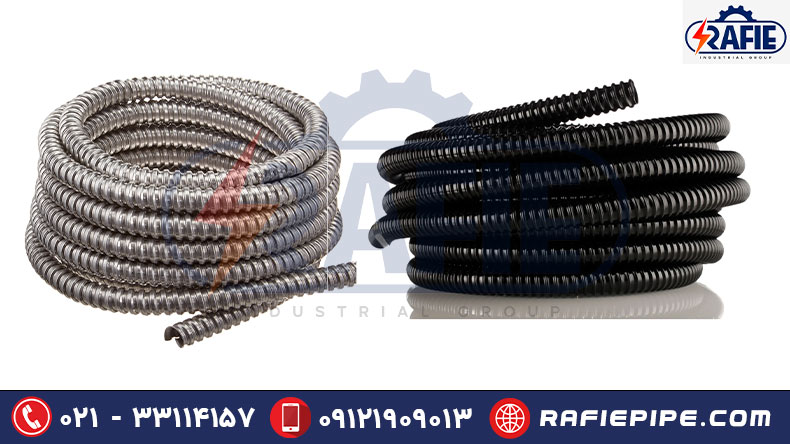
Since industrial flexible conduit has a flexible structure, their packaging type is in coil form. Coils are actually rolls of conduit used in the packaging process. In general, conduits are packaged in two ways: either in bundle form or in coil form.
Bundled conduits are related to various types of electrical steel conduit. Due to their rigid and inflexible material, these conduits are prepared in quantity-based packaging in bundled form. Alongside these, flexible conduits are rolled in relatively long lengths to have easier transportation and sales operations.
Each coil roll of flexible electrical conduit usually reaches up to 25 meters. Naturally, as its size increases, the conduit diameter increases, and on the other hand, it also affects the length of each coil, in which case it causes the conduit length to decrease somewhat. Precise information about the type of conduit, its dimensions, total length, and structural features is written on each package so that at the time of purchase, you know what technical specifications each coil has.
Dear customers can purchase various types of flexible conduits in different sizes along with other related products such as glands and flexible conduit clamps from this center. Also, the experts of Rafi Industrial Group provide you with the most comprehensive information and specialized consultations to have an ideal purchasing experience.
To receive free consultation, please fill out the form below. Rafi Industrial Group consultants will contact you as soon as possible.
To receive free consultation, please fill out the form below. Rafi Industrial Group consultants will contact you as soon as possible.